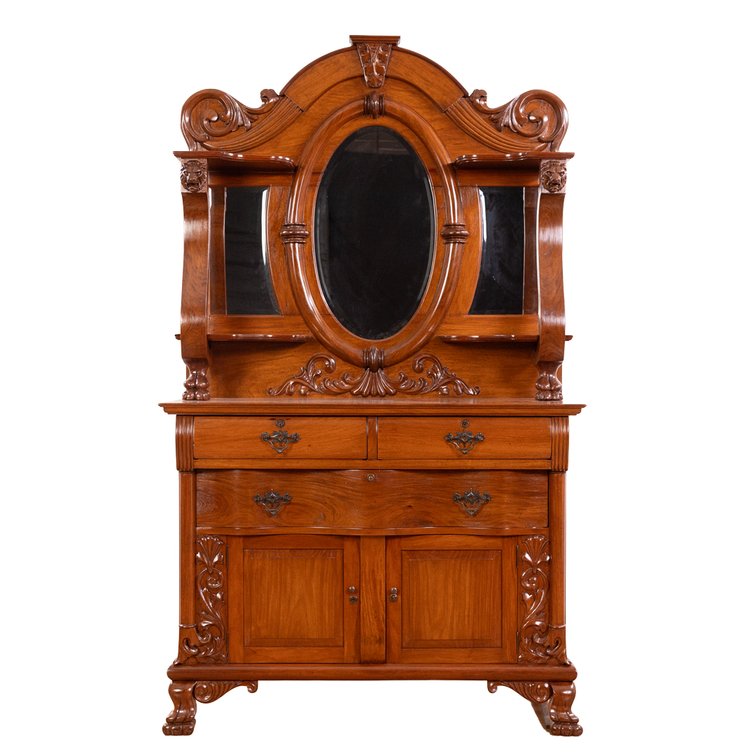
#196 • An Eduardo Atay’s Rococo Revival lansena (cupboard)
Part of The Well-Appointed Life (live auction by Blue Box Auction Gallery)
Location: Makati City, MM
Status: SOLD
Category: Display Objects
Bid with Salcedo Period: c. 1920s Origin: Binondo, Manila Materials: Narra wood, beveled mirror, brass mounts, iron hardware Dimensions: 212 x 122.5 x 61 cm (83 1/2 x 48 1/4 x 24 in) This exceptional two-tier lansena sideboard is a premier example of early 20th-century Manila furniture making. It beautifully showcases the high-luxury Rococo Revival style popularized by the celebrated workshop of Eduardo Ah Tay – the son and successor of the legendary master artisan Ah Tay. To align with social shifts of the era, Eduardo later Hispanized his Chinese surname to "Atay." This majestic, commanding piece was built as a main status symbol for the dining room. The upper section, designed for displaying highly prized wares and dishes, features a prominent, centrally molded beveled oval mirror topped by an arched pediment with a carved foliate keystone and C-scroll volutes. Resting directly beneath the mirror is a low-relief frieze detailed with a stylized palmette shell and trailing acanthus scrolls. This central mirror is flanked by stepped-tier étagère display shelves, which are supported by architectural posts adorned with high-relief carved lion masks resting on paw feet. The lower comoda base offers a highly sophisticated storage layout; the top drawer features an ogee-molded, cushion-front profile with reeded corners, sitting above a wider secondary drawer boasting a striking, undulating serpentine facade. Both drawers retain their original, beautifully patinated Rococo-style brass bail pulls. Below, a two-door cabinet with cleanly fielded panels is framed by corner stiles heavily carved with high-relief palmette shells and cascading acanthus foliage. The upper drawers were traditionally reserved for valuable silverware, fine embroidered linens, and delicate serving accessories. Behind the cabinet doors, the spacious interior accommodated heavy serving platters, imported liquors and wines, and complete tea and coffee services. This entire monumental piece is anchored by a valanced base skirt and stands proudly on robust, masterfully sculpted lion-paw feet. Ultimately, this magnificent piece serves as definitive proof that Eduardo Atay was a thoroughly deserving successor to his father’s legendary workshop.