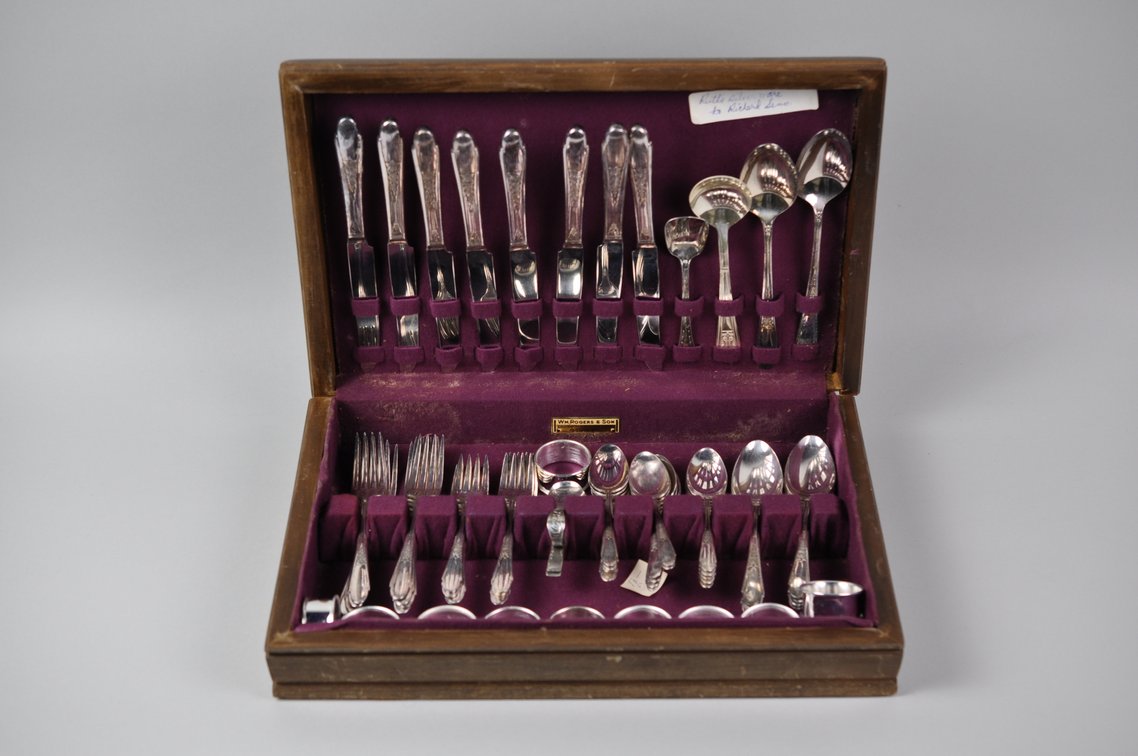
#196 • WM Rogers and Son Silver Plated Victorian Rose Flatware
Part of Estate Treasures 82: Coins, Fine Jewelry, Decor, & More (live auction by Blue Box Auction Gallery)
High bid $30.00
Status: SOLD
Estimated Value: $100-250 Manufacturer: WM Rogers and Son, 1881 Rogers, Royal Saxony, Lynbrook, and Imperial Dimensions: Wood Case 16.5x11x3.5in Condition: Various Conditions Additional Information: The mid-1800s WM Rogers and Son silverplated flatware set reflects the refinement of Victorian dining. Its “Victorian Rose” pattern, three roses diminishing in size with leaf accents, decorates both sides of each handle. Stamped “WM Rogers and Son” with “IS” for International Silver, the set includes butter knives, spoons, dessert spoons, forks, dessert forks, and serving spoons, offering a complete picture of period table service. The set comes with a wood box that is lined with royal purple felt with a tag WM Rogers and Son, Original Rogers Silver Plate, An IS Product. The 1936 Lynbrook sugar or jelly spoon, with its square bowl, was designed for spreading and scooping. Stamped with the maker’s name and “Silver Plate,” it reflects the practical elegance of the Depression era. A year earlier, the 1935 Royal Saxony serving spoon, also silverplated, offered a more traditional form. Produced by International Silver, it catered to American tastes for European-influenced design. The 1881 Rogers Oneida appetizer spoon and fork, despite the date in the name, were made in the mid-20th century. Stamped “1881 Rogers Oneida LTD,” these smaller pieces reflect Oneida’s effort to combine heritage branding with modern production. The Imperial baby spoon, made between 1963 and 2000, is a sentimental keepsake. With a curved loop handle, star accents, and the word “Baby” on the front, it was designed for small hands and special occasions. The “Imperial Silver Plate” mark ties it to the broader tradition of commemorative silverware. Finally, the ten silverplated napkin rings marked “Made in Hong Kong Silver Plated” represent late 20th-century mass production. Simple and functional, their modest design and imperfect stamp reflect global manufacturing trends and changing dining customs. Together, these pieces trace over a century of tableware history. They document changes in taste, manufacturing, and social rituals, from Victorian floral ornament to modern sentimental keepsakes and industrial exports.