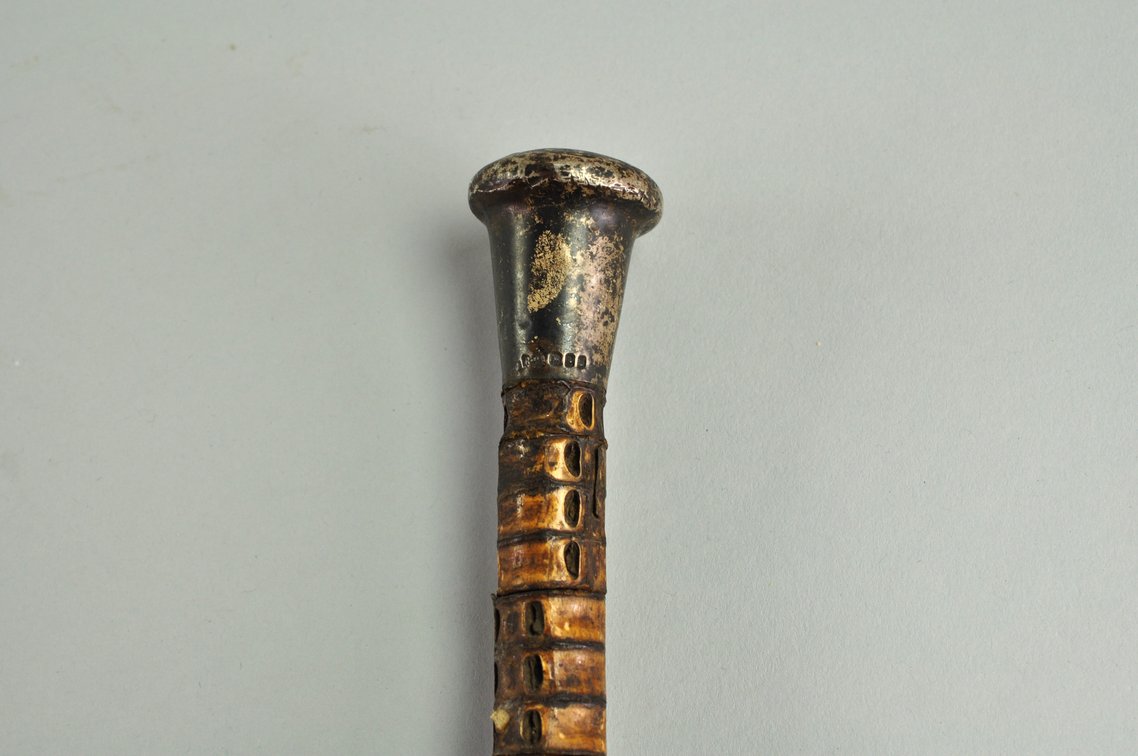
#4063 • Isaac Hull's Shark Vertebrae Cane, 1812, USS Constitution
Part of Worldwide Relics - Historic World Relics, Artifacts & Ephemera (live auction by Blue Box Auction Gallery)
High bid $5,250.00
Status: Sold
Estimated Value: 6000 - 8000 A true one of a kind historic relic! This silver topped cane made with shark vertebrae along the shaft, was reported as being surrendered to Captain Isaac Hull of the USS Constitution from James Richard Dacres, Captain of the HMS Guerriere, the British warship captured by Captain Isaac Hull on the USS Constitution on August 19th, 1812, in the waters southeast of Halifax, Nova Scotia. The historic battle was a profound victory for the American side of the 1812 war, and established the American Navy's prowess in battle against the British formidable foe. See attached document for more information under the document tab of this items listing. After defeat, when Captain Dacres boarded the USS Constitution, he gave Captain Hull his silver mounted cane made from a shark’s vertebrae. Captain Hull accepted the cane and allowed Captain Dacres to keep his sword and bible. The top of the cane is silver and is stamped. The makers mark is B . P (possibly Benjamin Preston, Sr. (1789 - 1848) -London). The silver mark is the standing lion from London. The agent mark and the year mark are difficult to identify, but shown for the readers conclusion. The bottom has a bronze and iron cap. The cane has multiple portions of rounded shark vertebrae. The vertebrae were carefully harvested and matched to the anatomy of the shark. Some of the vertebrae rotate about the iron rod shaft in chunks. The pommel and the ferrule are tight. The vertebrae have some yellow and brown coloring from wear of time, as well as the top has some tarnishing and light scratches. The silver handle has 5 marks. Provenance: The cane was sold from the Hull's Estate to Norm Flayderman, in 1970’s, an avid and well known purveyor of Military Antiquities. It was then acquired for the Robert Yost Collection in Albemarle County, VA and then by a private collector in the Shenandoah Valley of Virginia and made available for auction. It measures 1.5 in. in diameter at its widest, about 0.5 in. in diameter at its slimmest, and 32.75 in. tall.