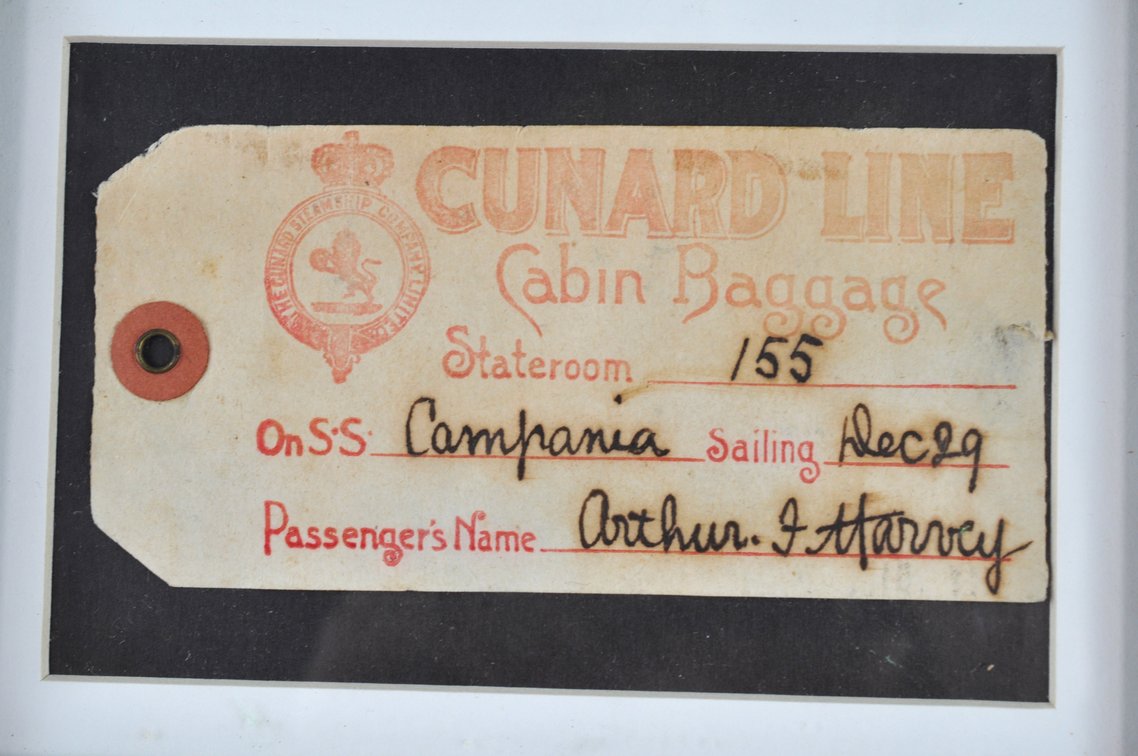
#18 • Cunard Line Cabin Baggage Tag from the ship S.S. Campania 1900
Part of Worldwide Relics - Historic World Relics, Artifacts & Ephemera (live auction by Blue Box Auction Gallery)
High bid $60.00
Status: SOLD
Estimated Value: 200 - 500 Rare Cunard Line Cabin Baggage Tag from the ship S.S. Campania sailing December 29th for passenger Arthur F. Harvey. This framed and mounted luggage tag is believed to have been used on a voyage from New York to Liverpool, sailing on December 29, 1900, just months after Campania collided with the Embleton in July of the same year. This is the best estimate as concluded by the last documented sailing our research team could find mentions Liverpool – New York, sailing December 22nd. Transit time aboard the Campania was about 5-6 days from Liverpool to New York. With that in mind, it’s feasible that the ship would have turned around within a couple of days later to return. The next documented sailing from Liverpool to New York arrived on January 19th, 1901. The voyage record is according to the Norway Heritage Project website. The passenger’s name was Arthur F. Harvey. Research shows passenger, Arthur Harvey, emigrated from Liverpool and arrived in New York on December 14, 1895, as found in the Ellis Island archives. That embarkation was aboard the same HMS Campania and it’s believed the passenger returned to Liverpool, for reasons unknown, aboard the same ship. RMS Campania was a British ocean liner owned by the Cunard Line, built by Fairfield Shipbuilding and Engineering Company of Govan, Scotland, and launched on Thursday, 8 September 1892. Campania was the largest and fastest passenger liner afloat when she entered service in 1893. She crossed the Atlantic in less than six days, and on her second voyage in 1893, she won the prestigious Blue Riband, previously held by the Inman Liner SS City of Paris. Campania dragged her anchor in a sudden squall, and at 03:45 struck the bow of the battleship Royal Oak and then dragged along the side of the battle cruiser Glorious. She began to sink stern first. A few hours later an explosion—presumed to be a boiler—sent her to the bottom. Supporting research documentation is provided here for reference. Measures: 6x4in